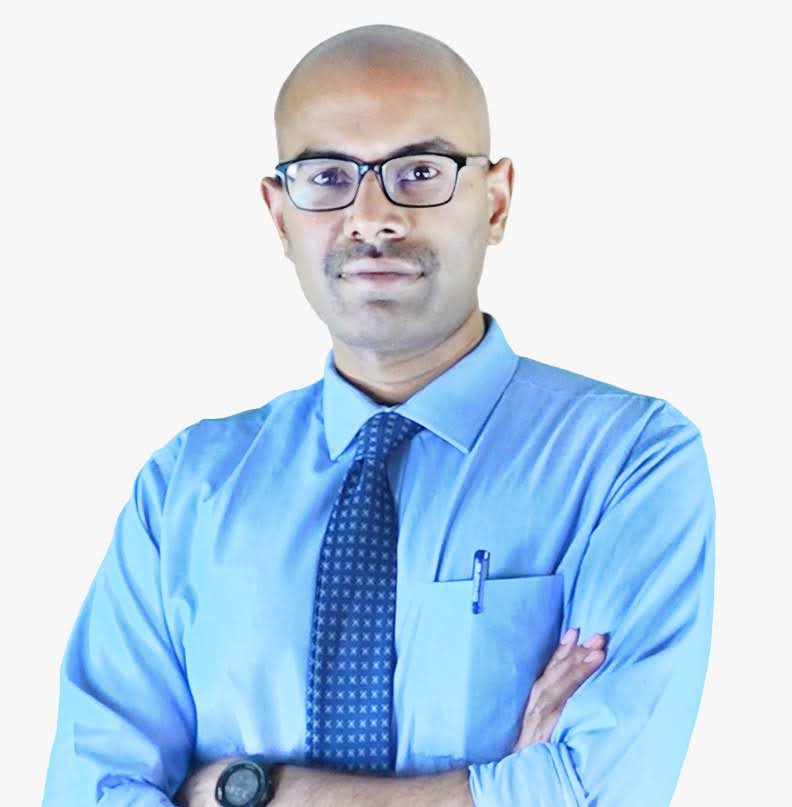
Fellowship-trained paediatric hand surgeon with international training from USA, Japan, Singapore & India — dedicated to the full spectrum of children's upper limb conditions.
Fellowship-trained at Texas Scottish Rite Hospital, Dallas and under Dr. Doi in Japan — two of the world's foremost paediatric hand surgery centres.
❤️
Family-Centred Care
Every consultation is thorough and unhurried. We invest time ensuring families fully understand their child's condition and what to expect at every stage.
🔬
Research-Backed Outcomes
30+ publications in international peer-reviewed journals. Social Media Editor for the Journal of Hand Surgery (American). Regular faculty at national and international conferences.
Dr. Kannan Karuppiah Kumar is a highly accomplished hand and upper limb surgeon with extensive international training and over 16 years of specialised experience. He completed his MBBS at M.S. Ramaiah Medical College, Bangalore (2000–2006), followed by his MS Orthopaedics at Karnataka Institute of Medical Sciences (KIMS), Hubli (2007–2010), where he secured the highest marks in theory and 3rd rank overall in the MS Orthopaedics examination.
"I want all my patients to be informed and empowered about their health care — from the moment of diagnosis through to a full recovery."
During his final year of residency, Dr. Kumar developed a deep interest in hand surgery, particularly in brachial plexus injuries and peripheral nerve conditions. This passion led him to pursue multiple prestigious international fellowships, training under world-renowned surgeons across four continents. He trained for 14 months under Dr. Doi in Japan — globally one of the foremost brachial plexus surgeons — in nerve transfer and free muscle transfer surgery.
He is currently Senior Consultant at HOSMAT Hospital, Bangalore (since October 2014), and serves as Social Media Editor for the Journal of Hand Surgery (American) — one of the most respected hand surgery journals in the world.
Professional Memberships
ISSHASSHIOAKOA
Languages
English (IELTS 8.5)TamilKannadaHindi
Fellowship Timeline
01
Dr. Paul Brand Fellow — Hand & Microsurgery🇮🇳 CMC Vellore · Aug 2010 – Jul 2011 · 12 monthsComprehensive training in all aspects of hand and upper extremity surgery at one of India's most prestigious institutions.
02
Clinical Fellow — Shoulder & Elbow Surgery🇸🇬 National University Hospital, Singapore · Jan–Jul 2012 · 6 monthsSpecialised training in shoulder and elbow surgery including arthroscopic procedures.
03
Kleinert Fellow — Hand & Microsurgery🇺🇸 Christine M. Kleinert Institute, Louisville, Kentucky · Aug 2012 – Mar 2013 · 12 monthsWorld-renowned for flexor tendon surgery, replantation, and microsurgery.
04
Fellow — Brachial Plexus Surgery (under Dr. Doi)🇯🇵 Ogori Daiichi Hospital, Japan · May 2013 – Jul 2014 · 14 monthsNerve transfers, free muscle transfers, complex brachial plexus reconstruction under Dr. Kazuteru Doi — global pioneer.
KVPY Fellowship — Government of India (2002). One of only 6 candidates selected nationally. Three years research at Indian Institute of Science, Bangalore.
📚
30+ peer-reviewed publications in international journals. Author of book chapters in Textbook of Orthopaedics and Textbook of Hand Emergencies.
🎓
Course Director — Upper Limb Exposures Course (2018–2024). Thesis guide to ten orthopaedic residents. Regular national and international faculty.
What We Do
Paediatric Upper Limb Services
Comprehensive surgical and non-surgical care for children from birth through 18 years, across the full spectrum of hand and upper limb conditions.
Surgical Services
Specialist Surgical Expertise
🤲
Congenital Hand Surgery
Syndactyly separation with skin grafting
Polydactyly correction and reconstruction
Thumb hypoplasia — opponensplasty and pollicization
A full spectrum of paediatric hand and upper limb conditions — each described in detail with treatment options. Click any condition to learn more.
Congenital
Syndactyly — Webbed Fingers
Webbed or fused fingers due to incomplete separation during fetal development. One of the most common congenital hand differences, affecting 1 in 2,000 births.
Signs & Symptoms
Two or more fingers joined by skin, sometimes with bone fusion
May be simple (skin only), complex (bone and skin), complete (to fingertip), or incomplete (partial)
Often involves the middle-ring finger pair; can be bilateral
Rarely causes pain but limits independent finger movement
Treatment
Surgery between 6 months and 2 years of age for best results
Fingers separated using carefully planned zigzag skin flaps
Full-thickness skin grafts from the groin reconstruct the web space
Cast for 3–4 weeks post-op, then hand therapy begins
Results are excellent — independent finger movement restored
Surgery 6–24 monthsSkin GraftingHand Therapy90%+ Success Rate
Congenital
Polydactyly — Extra Digits
Extra fingers or thumbs — ranging from a small soft tissue tag to a fully formed extra digit with bones, joints, tendons, and a nail.
Signs & Symptoms
Pre-axial (thumb side): extra thumb, often complex and requiring careful reconstruction
Post-axial (little finger side): most common; Type A has bone and joint, Type B is a stalk-like tag
Central (middle of hand): rarest, often associated with cleft hand
Treatment
Type B (stalk): can be ligated in clinic as a newborn — no anaesthetic needed
Type A and pre-axial: surgical removal in theatre at 12–18 months
Careful reconstruction of the remaining digit ensures balanced, functional hand
Bone, tendon, and ligament reconstruction as needed for stable, well-aligned result
An underdeveloped or absent thumb, ranging from a slightly small thumb (Type I) to a completely absent thumb (Type V). Affects the ability to pinch, grip, and perform fine motor tasks.
Signs & Symptoms
Waugh classification Type I–V: small thumb to complete absence
Unstable MP joint, absent intrinsic muscles, narrow web space in moderate cases
In severe cases (Types III–V): floating thumb or complete absence
Treatment
Type I: observation and hand therapy only
Type II: web space deepening, MP joint stabilisation, opponensplasty (muscle transfer to restore pinch)
Types IIIb, IV, V: Pollicization — the index finger is surgically repositioned to create a new thumb
Pollicization gives excellent long-term function; children adapt remarkably well
Timing: opponensplasty 12–18 months; pollicization usually before 2 years
OpponensplastyPollicizationWeb Space DeepeningSurgery before age 2
Congenital
Radial Club Hand — Radial Longitudinal Deficiency
The radius bone on the thumb side of the forearm is absent or significantly underdeveloped, causing the wrist to deviate sharply toward the thumb side. Associated with thumb hypoplasia.
Signs & Symptoms
Wrist deviated radially (toward thumb side) by 60–90°
Forearm shortened; elbow may have limited motion
Thumb absent or hypoplastic in most cases
May be associated with VACTERL or Fanconi anaemia — cardiac and haematological screening essential
Treatment
Multidisciplinary screening for associated cardiac, renal, and haematological conditions before surgery
Stretching and casting from birth to maximise wrist flexibility
Surgical centralisation or radialisation of the wrist on the ulna at 6–12 months
Tendon transfers to maintain correction; the wrist is stabilised with a pin
Thumb reconstruction (pollicization or opponensplasty) in a second stage
Long-term hand therapy and splinting to maintain correction
The thumb becomes locked in a bent position due to a nodule (Notta's node) on the flexor tendon that catches on the A1 pulley. Usually noticed between 1–3 years of age.
Signs & Symptoms
Thumb locked in a bent (flexed) position that cannot be straightened passively
A firm, palpable nodule at the base of the thumb (Notta's node)
May snap in and out, or be permanently locked
Usually painless; often discovered by parents when the child begins using hands more
Treatment
Observation in children under 1 year — spontaneous resolution possible
Surgery recommended by 2–3 years if not resolved, to prevent joint stiffness
Simple day-case procedure under brief general anaesthetic
Small 1cm incision at the base of the thumb releases the A1 pulley
Soft bandage for 7–10 days; full movement restored within weeks
Results are uniformly excellent with no recurrence after surgery
Day Case SurgeryA1 Pulley ReleaseResolution within weeksSurgery by age 3
Congenital
Triphalangeal Thumb
The thumb has three bones (phalanges) instead of the normal two, making it unusually long and finger-like. It may lack the normal opposing position needed for pinch.
Signs & Symptoms
Thumb appears longer than normal, sometimes finger-like in appearance
Difficulty opposing the thumb for pinch and grip
May be isolated or associated with radial polydactyly
Ranges from a delta-shaped extra bone (mild) to a fully formed extra phalanx (severe)
Treatment
Removal of the extra (middle) phalanx to restore normal thumb length
Web space deepening to improve position for pinch and opposition
Opponensplasty (muscle transfer) to restore rotation if absent
Timing: usually 12–24 months of age
Results are excellent; children achieve good pinch and grip function
Extra Phalanx RemovalOpponensplastyWeb Space DeepeningTiming: 12–24 months
Congenital
Symbrachydactyly
Short or absent fingers, typically affecting one hand only. Not usually hereditary. Caused by an in-utero vascular disruption rather than a genetic mutation.
Signs & Symptoms
Short, stub-like fingers with small nail remnants at the tips
May have varying finger involvement — often the central fingers are most affected
Usually unilateral (one hand)
Forearm and upper arm typically normal
Treatment
Many children adapt remarkably and need no surgery
Web space deepening to improve grip in selected cases
Toe-to-hand transfer (microsurgery) to create a functional thumb or finger in severe cases
Prosthetics and adaptive devices may complement surgery
Hand therapy focuses on maximising function and adaptive strategies
Often No SurgeryWeb Space DeepeningToe-to-Hand Transfer (selected)Adaptive Devices
Congenital
Poland's Syndrome
Congenital underdevelopment of the pectoralis major (chest muscle) on one side, with associated hand and arm differences on the same side. Affects 1 in 20,000 births.
Signs & Symptoms
Absence or underdevelopment of chest muscle on one side
Hand differences on the same side: most commonly syndactyly, short or absent middle finger bones, small hand overall
Nipple may be absent or misplaced
Usually isolated; arm function often preserved
Treatment
Syndactyly corrected surgically at 6–24 months (skin grafting, flap reconstruction)
Web space deepening for grip improvement
In severe cases: toe-to-hand transfer to provide a functional thumb or finger
Chest wall reconstruction addressed by plastic surgeons in adolescence
Treatment tailored entirely to each child's individual findings
Syndactyly CorrectionWeb Space DeepeningMulti-Specialist TeamTailored Approach
Congenital
Arthrogryposis — Multiple Joint Contractures
Multiple joint contractures present at birth due to reduced fetal movement in the womb. The muscles are underdeveloped, causing joints to become fixed in abnormal positions.
Signs & Symptoms
Multiple stiff joints in the hand, wrist, and elbow from birth
Wrists often flexed; fingers may be in fixed flexion or extension
Elbow may be extended and internally rotated
Intelligence and sensation are normal; this is a musculoskeletal condition only
Treatment
Stretching and splinting programmes from birth by a skilled hand therapist
Serial casting to progressively improve joint position
Surgical release of contractures when non-operative treatment is insufficient
Tendon transfers to improve active wrist or finger function
Goal: maximise independence for daily living activities — many children achieve remarkable function
Serial CastingTendon TransferSurgical ReleaseIndependence Focus
Congenital
Cleft Hand — Split Hand Malformation
A V-shaped gap in the centre of the hand due to absent central digits or bones. Ranges from a mild notch to complete absence of the central three rays.
Signs & Symptoms
V-shaped or U-shaped central gap in the hand
May affect one or both hands; often bilateral and hereditary
Pinch and grip affected by the cleft width and structure
Can be associated with cleft foot (cleft hand-foot syndrome)
Treatment
Surgery closes the cleft and improves pinch and grasp
The index finger and ring finger are brought together to narrow the gap
Web space reconstruction ensures functional, stable fingers
Timing: usually 12–18 months of age
Excellent functional and cosmetic outcomes achievable
Cleft Closure SurgeryWeb Space ReconstructionTiming: 12–18 monthsGood Outcomes
Sports & Trauma
Supracondylar Fracture of the Humerus
The most common fracture around the elbow in children, occurring just above the elbow joint after a fall on an outstretched hand. A paediatric emergency requiring urgent treatment.
Signs & Symptoms
Pain, swelling, and deformity around the elbow after a fall
The elbow appears "S-shaped" from the side — an abnormal bend
Reduced movement at the elbow
Critical: check hand colour, temperature, pulse, and finger sensation for vascular and nerve injury
Treatment
Non-displaced fractures: cast immobilisation in 90° of elbow flexion for 3 weeks
Displaced fractures: urgent surgical fixation with crossed Kirschner wires (K-wires) under general anaesthetic
Vascular injury: immediate exploration of the brachial artery if hand is pale or pulseless
Nerve injury (anterior interosseous nerve most common): usually recovers spontaneously within 3 months
Close monitoring for Volkmann's ischaemic contracture — the most feared complication
Surgical UrgencyK-wire FixationVascular Check EssentialMonitor for Nerve Recovery
Sports & Trauma
Lateral Condyle Fracture
A fracture through the lateral condyle of the humerus (the outer bump of the elbow) — commonly missed on initial X-rays. Can lead to serious complications if untreated.
Signs & Symptoms
Outer elbow tenderness and swelling after a fall
Fracture line crosses the growth plate — Salter-Harris Type IV
X-rays may appear normal; MRI or arthrogram needed to assess cartilage extension
Risk: non-union, malunion, and permanent deformity if missed or undertreated
Treatment
Undisplaced fractures: cast for 3 weeks with close X-ray monitoring every 5–7 days
Displaced fractures: surgical fixation with K-wires or screws
Late presentation: even at 2–3 weeks, surgical fixation is preferable to conservative management to prevent non-union
Long-term follow-up essential to monitor for lateral condyle overgrowth
Easy to MissSurgical Fixation if DisplacedClose MonitoringLong-term Follow-up
Sports & Trauma
Growth Plate (Salter-Harris) Fractures
Fractures involving the growth plate (physis) — the zone of cartilage where bone lengthening occurs. Unique to children; careful management is essential to prevent growth disturbance.
Signs & Symptoms
Five types (Salter-Harris I–V) based on which part of the physis is involved
Types I and II: usually straightforward, heal well
Types III, IV, V: involve the joint surface or crush the plate — higher risk of growth arrest
Common sites: distal radius, finger bases, distal humerus
Treatment
Type I and II: closed reduction and cast if displaced; excellent prognosis
Type III and IV: surgical reduction and fixation required to restore the joint surface and prevent growth arrest
Type V (crush injury): very rare; poor prognosis despite treatment
All growth plate fractures: follow-up for at least 12–18 months to detect growth disturbance early
Type determines treatmentSurgical fixation Types III–IV18-month follow-upGrowth monitoring
Sports & Trauma
Flexor Tendon Injuries
Cuts to the flexor tendons on the palm side of the hand — often from broken glass, knives, or sharp objects. In children, even small lacerations can sever the tendons completely.
Signs & Symptoms
Finger cannot bend at one or more joints despite trying
A wound on the palm side of the finger or hand
In young children: the finger rests in extension rather than normal slight flexion
Pain and swelling at the wound site
Treatment
All tendon lacerations require formal exploration and repair in theatre — never assume tendons are intact from the wound appearance alone
Primary repair within 24–72 hours gives the best results
Technique: modified Kessler repair with epitendinous suture for a strong, smooth repair
Post-operatively: a protective dorsal splint for 6 weeks; hand therapy is MANDATORY — never skip appointments
Therapy protocol prevents the most feared complication: tendon adhesion causing a stiff finger
The most commonly fractured carpal bone, yet frequently missed on initial X-rays because the fracture line may not be visible. Delayed diagnosis risks non-union and chronic wrist pain.
Signs & Symptoms
"Anatomical snuffbox" tenderness on the thumb side of the wrist after a fall
Swelling and difficulty gripping
Initial X-rays may appear normal even with a fracture
High clinical suspicion is essential — if in doubt, treat as a scaphoid fracture and repeat imaging in 10–14 days or obtain MRI
Treatment
Undisplaced fractures: thumb spica cast for 8–12 weeks; X-ray monitoring every 4 weeks
Proximal pole fractures (poor blood supply): surgical fixation with a headless compression screw even if undisplaced
Displaced fractures or delayed presentation: surgical fixation in all cases
Non-union requires bone grafting and fixation
Return to contact sport: 4–6 months minimum
Often MissedMRI if X-ray NormalSurgery for Proximal Pole4–6 months Recovery
Acquired
Trigger Finger — Stenosing Tenosynovitis
A finger tendon catches on its pulley (usually A1), causing the finger to click, snap, or lock in a bent position. More common in adults but can affect children, especially with juvenile idiopathic arthritis.
Signs & Symptoms
Finger locks in a bent position or clicks when straightening
Morning stiffness and locking — worst after a period of rest
Tenderness at the base of the finger on the palm side
In severe cases, the finger cannot be straightened at all and requires passive assistance
Treatment
Initial treatment: corticosteroid injection into the tendon sheath — 70–80% success for first injection
Splinting the finger in extension at night can reduce catching
Surgical A1 pulley release: simple day-case procedure under local or general anaesthetic, >95% success
No post-operative cast required; immediate movement encouraged
Scarring after burns causes the skin and underlying structures to shorten progressively, pulling joints into flexion. Without treatment, contractures worsen and permanently restrict hand function.
Signs & Symptoms
Tightness and restricted movement of fingers, hand, or wrist after burn injury
Skin appears white/pale, hard, and inelastic over the scar
Progressive deformity worsening as the child grows
Web spaces may be obliterated, joining fingers together
Treatment
Prevention is paramount: early specialist hand therapy, splinting in the position of safe immobilisation, and compression garments for all burn injuries
Established contracture: surgical release of the scar — Z-plasty to re-orientate the scar, or excision and skin grafting
Complex web space involvement: local or regional flap coverage
Full-thickness grafts preferred over split-thickness for better durability and less secondary contracture
Post-operative therapy and splinting essential to prevent recurrence
Benign fluid-filled cysts arising from a joint or tendon sheath, most commonly at the back of the wrist. The most common soft tissue mass of the hand and wrist in all ages.
Signs & Symptoms
Smooth, rounded, firm swelling on the wrist — usually on the back (dorsum)
May appear and disappear spontaneously
Can cause aching after prolonged hand use
Rarely painful at rest; transilluminates (light passes through it)
Treatment
Observation: many resolve spontaneously, especially in children — initial treatment of choice
Aspiration (needle drainage): successful in up to 50% but recurrence is common
Surgical excision: if symptomatic or recurrent; root of the cyst must be excised to prevent recurrence
Damage to the brachial plexus nerve network during delivery — the most common significant nerve injury in children. Ranges from mild weakness to complete arm paralysis depending on the extent of nerve root involvement.
Spontaneous recovery: 70–80% of mild cases recover substantially in the first 3–6 months
Treatment
All cases: intensive physiotherapy from birth — passive range of motion to prevent joint stiffness
Botulinum toxin injections to antagonist muscles to improve shoulder and elbow active movement
Surgical exploration and reconstruction at 3–6 months if no biceps recovery (Narakas criteria)
Nerve repair: direct repair if roots are intact; nerve grafting from the sural nerve for gaps
Nerve transfers: intercostal, spinal accessory, phrenic, or contralateral C7 nerves to power arm muscles
Secondary procedures: shoulder external rotation reconstruction, elbow flexion restoration with free gracilis muscle transfer (Dr. Kumar trained under Dr. Doi — world pioneer in this technique)
Success rates exceeding 90% with modern nerve surgery
Surgery 3–6 monthsNerve Repair/GraftingNerve TransfersFree Muscle Transfer>90% Success
Nerve — Brachial Plexus
Traumatic Brachial Plexus Injury
Traction injury to the brachial plexus from high-energy trauma — motorcycle accidents, falls, or sports injuries in older children and teenagers. Can cause devastating arm paralysis.
Signs & Symptoms
Complete or partial arm paralysis following high-energy trauma
"Upper trunk injury" (C5-C6): shoulder and elbow weakness
"Total palsy": complete arm flail — all 5 nerve roots involved
Horner's syndrome: indicates preganglionic avulsion (root torn from spinal cord)
Burning pain (causalgia) in the arm
Treatment
Imaging: MRI of the brachial plexus and CT myelogram to identify avulsed roots
Surgery: within 3–6 months of injury for best nerve regeneration potential
Nerve grafting: bridge gaps between intact nerve stumps
Nerve transfers: key strategy for avulsion injuries where roots cannot be repaired directly
Intercostal nerve transfer to musculocutaneous nerve (biceps) — restores elbow flexion
Free functioning gracilis muscle transfer — restores elbow flexion and finger grasp in late cases
Pain management: gabapentin, amitriptyline; dorsal root entry zone (DREZ) surgery for intractable pain
Surgery within 3–6 monthsNerve GraftingNerve TransfersFree Muscle TransferPain Management
Nerve — Peripheral
Radial Nerve Palsy
Injury to the radial nerve causing wrist drop and loss of finger and thumb extension. In children, most commonly caused by humeral shaft fractures or pressure injuries.
Signs & Symptoms
Wrist drop: inability to extend the wrist
Loss of finger and thumb extension
Weakness of grip (as wrist extension is needed for power grip)
Sensation loss over the dorsal thumb and first web space — often mild
Treatment
If associated with humeral shaft fracture: most recover spontaneously as the nerve is usually in continuity (neuropraxia) — observe for 3–6 months
Wrist and finger extension splint to maintain hand function during recovery
Electromyography (EMG) at 3 months to assess reinnervation
If no recovery by 3–4 months: surgical exploration; nerve repair or grafting
Late cases or failed nerve repair: tendon transfer surgery (pronator teres to ECRB; FCR to EDC; PL to EPL) restores full wrist and finger extension
Tendon transfer results are excellent in children
Usually Recovers SpontaneouslySplinting During RecoveryEMG at 3 monthsTendon Transfer if Needed
Nerve — Peripheral
Ulnar Nerve Palsy
Injury to the ulnar nerve causing weakness of the intrinsic hand muscles and claw hand deformity. In children, most commonly caused by elbow injuries, lateral condyle fractures, or cubital tunnel compression.
Signs & Symptoms
Claw hand: ring and little fingers hyperextend at the knuckles and flex at the middle and end joints
Weak grip and pinch
Wasting of the hypothenar muscles and first web space (severe cases)
Numbness of the little finger and inner ring finger
Treatment
Acute injury: primary nerve repair within 72 hours if sharply divided
Delayed presentation or blunt injury: nerve repair, grafting, or neurolysis as appropriate
Cubital tunnel syndrome (compression at elbow): decompression or transposition of the nerve
In young children with good nerve recovery potential, nerve surgery alone often gives excellent results without tendon transfer
Primary Nerve RepairNeurolysis/DecompressionTendon TransferGood Recovery Potential in Children
Nerve — Peripheral
Peripheral Nerve Tumours
Benign nerve tumours of the hand and arm — most commonly schwannomas (from the nerve sheath) or neurofibromas (from the nerve fibres themselves). Malignant tumours are rare.
Signs & Symptoms
Soft, rounded swelling along the line of a nerve
Tingling or shooting pain on pressure over the mass (Tinel's sign)
May cause weakness or numbness if large
In neurofibromatosis (NF1): multiple tumours along multiple nerves
Treatment
MRI to characterise the tumour and plan surgery
Schwannoma: can usually be shelled out (enucleation) from the nerve without disturbing the fibres — preserving nerve function completely
Neurofibroma: more intimately involved with nerve fibres; surgical excision may require nerve grafting
Post-operative nerve function monitoring; recovery usually good after schwannoma excision
MRI PlanningEnucleation (Schwannoma)Nerve Grafting if NeededExcellent Schwannoma Outcomes
Recovery Guidance
Post-Operative Care
Everything your family needs to support a smooth, safe recovery at home — from the day of surgery through full healing.
⚠️ Emergency: Call 063643 29177 immediately if your child has fever over 101°F, increasing pain, pale or cold fingers, foul smell from cast, or excessive bleeding.
Recovery Steps
The Four Pillars of Recovery
1
Elevation
Keep hand above elbow, elbow above shoulder, shoulder above heart — continuously for the first 3–7 days.
2
Ice & Wound Care
Ice 20 min every 2–3 hours. Keep dressing dry and intact. Do not remove or get the dressing wet.
3
Pain Management
Give pain medicines regularly as prescribed — do not wait until pain is severe. Take with food to prevent nausea.
4
Hand Therapy
Attend every therapy session. Hand therapy is MANDATORY. Never skip appointments — it determines your final result.
The 3-5-7 Day Elevation Rule
Arm Elevation
Hand above elbow. Elbow above shoulder. Shoulder above heart.
3
Elevate strictly Days 1–3
5
Continue if swelling persists
7
Continue if still significant
At every TV commercial break: raise the arm in a "salute" position, count to 20, then rest. Gently bend and straighten visible fingers every hour to promote circulation.
Retrograde Massage
Place thumb and index finger on the sides of your child's fingers
Slowly "milk" swelling upward toward the knuckle joints
Gentle and consistent — never press hard
Continue throughout the elevation period
Finger Motion Exercises
If fingers are visible, gently bend then straighten at the knuckles
Count to 10 during each movement, every hour during the day
Stop immediately if your child is in severe pain
Call the clinic if unsure whether to move them
Cast Management
Keeping the Cast Safe
Keep It Dry
No water contact — no baths, pools, rain, juice, or sodas
Sponge bath only — seal plastic bag over cast with adhesive tape
Cool hair dryer only if it gets damp (never warm or hot setting)
Keep It Clean
Cover cast with a white tube sock at all times
Use sippy cups to prevent spills near the cast
A soiled cast can cause wound infection requiring hospitalisation
Keep It Cool
Sweat creates a warm moist environment — avoid strenuous activities
Stay indoors during hot weather
Avoid sand, soil, or particles near the cast opening
⚠️ Call the Clinic Immediately If:
Rotten or foul odour from inside the cast
Green or yellow drainage staining through the cast
Fever above 101°F / 38.3°C
Severe pain not controlled by prescribed medication
Cast cracks, breaks, or becomes very loose
Fingers become pale, blue, or cold
Patient Information
Patient Guides
Detailed information sheets on diagnoses, surgery preparation, and home care. Click any guide to read the full content.
Condition Information
Understanding Your Child's Diagnosis
🖐️
Syndactyly
Webbed fingers due to incomplete separation at birth — surgical correction and what to expect
Read guide →
✋
Polydactyly
Extra fingers or thumbs — ligation, surgical removal, and reconstruction
Read guide →
👍
Trigger Thumb
Thumb locked in bent position — the Notta's node, and how surgery resolves it
Read guide →
💪
Arthrogryposis
Multiple joint contractures from birth — splinting, casting, surgery, and goals
Read guide →
🧠
Brachial Plexus Birth Injury
OBPI — what it is, when surgery is needed, and what Dr. Kumar offers
Read guide →
💉
Botox® for Muscle Imbalance
How botulinum toxin is used to prevent contractures and improve hand function
Read guide →
Surgery & Hospital
Preparing for Surgery
📋
Pre-Operative Guidelines
What to tell the clinic nurse before scheduled surgery — illness, allergies, medications
Read guide →
🏥
Day Surgery Instructions
Fasting rules, medications on the day, clothing, and what to bring
Read guide →
🔍
Surgery: What to Expect
From admission to recovery — a full walkthrough for families and children
Read guide →
Home Care
Recovery at Home
🩹
Cast Care Tips
Keep it dry, clean, and cool — warning signs and when to call the clinic
Read guide →
🛁
Cast Care for Small Children
Sponge bath technique, sippy cups, tube sock covering for toddlers
Read guide →
⬆️
The 3-5-7 Elevation Rule
Why elevation matters, the salute exercise, and retrograde massage
Read guide →
🩺
Wound Care Management
Skin graft care, donor site, trigger thumb cast removal, daily wound routine
Read guide →
💛
Dealing with Teasing & Bullying
Do's and don'ts for parents, and suggested responses for children
Read guide →
📅
Day Surgery Instructions
Everything about the day — fasting, what to bring, what to expect
Read guide →
Patient Education
Videos & Education
Procedure overviews, home care guides, and condition explainers from Dr. Kumar's YouTube channel.
"After my son's motorcycle accident, Dr. Kumar performed nerve transfer surgery. He has regained most of his arm function. His expertise in brachial plexus surgery is remarkable!"
Rajesh K.
Brachial Plexus Reconstruction · HOSMAT Hospital
★★★★★
"Dr. Kumar explained my daughter's condition so clearly — we finally understood what we were dealing with. His calm manner put our whole family at ease before and after surgery."
Parent — Syndactyly Surgery
HOSMAT Hospital, Bangalore
★★★★★
"Our son's brachial plexus injury was treated expertly. After surgeries and therapy, he can now use his arm normally. Forever grateful!"
Sneha N.
OBPI Reconstruction · HOSMAT Hospital
★★★★★
"We came from another city specifically for Dr. Kumar's paediatric expertise. Worth every kilometre — my child is back to full function."
Parent — Polydactyly Correction
Referred from Paediatrician
★★★★★
"The post-op information on this website was a lifesaver. We knew exactly what to expect each day. Dr. Kumar was available when we had concerns — that trust meant everything."
Parent — Trigger Thumb Release
Private Referral
★★★★★
"From diagnosis to recovery, the care was at an international standard right here in Bangalore. Truly grateful for what he did for my child."
Parent — Radial Club Hand
HOSMAT Hospital, Bangalore
Common Questions
Frequently Asked Questions
Early assessment is always beneficial. For most congenital conditions, an initial consultation within the first few months of life allows optimal surgical timing planning. Some conditions — such as syndactyly between index and long finger — are best addressed before 18 months. There is no age too early to seek an opinion, and the initial consultation is non-committal.
Not at all. Many conditions — including mild trigger thumb, small ganglion cysts, and many congenital differences — can be managed successfully with splinting, physiotherapy, or observation. Dr. Kumar takes a conservative-first approach and only recommends surgery when it offers a clear functional or developmental benefit for the child.
OBPI occurs when the brachial plexus nerves are damaged during a difficult birth, causing arm weakness or paralysis. Most mild cases recover spontaneously. For severe cases, Dr. Kumar — trained 14 months under Dr. Doi in Japan, a globally recognised pioneer — offers nerve repair, nerve transfer, and free muscle transfer surgery with success rates exceeding 90%.
Call 063643 29177, message via WhatsApp on +91 98862 74675, email kumarhand@gmail.com, or complete the appointment form on the Contact page. Please bring any existing X-rays, MRI scans, or paediatric reports to your first consultation.
Pain management is a priority. Give medicines regularly as directed — don't wait until pain becomes severe. Take medication with food to prevent nausea. Most children experience the most discomfort in the first 48–72 hours, which then reduces significantly.
Recovery depends on the procedure. Trigger thumb release: return to normal within 2 weeks. Syndactyly: hand therapy for 3–4 months. Tendon repairs: 6–12 weeks of protected therapy. Brachial plexus nerve surgery: 12–24 months for maximum nerve recovery. Dr. Kumar will give you a specific timeline at your consultation.
Yes. For patients unable to visit in person, video consultations are available. Contact us via WhatsApp (+91 98862 74675) or call 063643 29177 to schedule a virtual appointment.
Children sense parental anxiety — staying calm is one of the most powerful things you can do. Honest, age-appropriate information helps older children. Playing 'pretend hospital' with a toy can help younger children prepare. Dr. Kumar's team will walk your family through every step at the pre-operative appointment.
External Links & Support
Resources for Children
A curated directory of peer support networks, adaptive sports, clinical information, and adaptive living resources for children with limb differences and their families worldwide.
🤝
Peer Support & Networks
Support organisations and peer communities for children with limb differences and their families.
6 resources
Browse Peer Support & Networks →
🏅
Adaptive Sports & Play
Sport organisations, adaptive athletics programmes, and play resources for children with limb differences.
6 resources
Browse Adaptive Sports & Play →
📚
Clinical & Educational
Hand surgery references, clinical centres, disability rights, and educational resources.
6 resources
Browse Clinical & Educational →
🏠
Adaptive Living & Equipment
Products, equipment, media, and everyday resources to support independence and quality of life.
6 resources
Browse Adaptive Living & Equipment →
⚠️ These are external websites not affiliated with KidsHands.org or Dr. Kannan Kumar. Links are provided for information only.
🤝 Peer Support & Networks
Peer Support & Networks
Support organisations and peer communities for children with limb differences and their families.
⚠️ These are external websites. Links are provided for information only — please verify each organisation is currently active.
I-CAN ⭐ Highly Recommended
International Child Amputee Network
Internet mailing list providing information and support to children with absent or underdeveloped limbs and their parents. Especially valuable for upper limb differences.
PULS 2026 is the inaugural Pediatric Upper Limb Summit — a focused two-day scientific conference dedicated entirely to the surgical management of hand and upper limb conditions in children.
Featuring three international keynote lectures and six specialist sessions, the summit brings together leaders in congenital hand surgery, paediatric trauma, brachial plexus reconstruction, and microsurgery.
Dr. Kannan Kumar is a member of the Core Organising Committee for PULS 2026, reflecting his standing as one of India's leading paediatric upper limb surgeons.
Core Organising Committee
Dr. Kannan K. Kumar
KidsHands.org · HOSMAT Hospital, Bangalore
📞 +91 98862 74675 · ✉️ kumarhand@gmail.com
Dr. Bipin Ghanghurde
📞 +91 77387 29068 · ✉️ bipinghanghurde@gmail.com
Dr. Parag Lad
📞 +91 88791 00395 · ✉️ paraglad00@gmail.com
1st Announcement
Conference Announcement Poster
1st Announcement — PULS 2026
The inaugural Pediatric Upper Limb Summit 2026
is officially announced. Two days of focused scientific sessions dedicated entirely
to the surgical management of hand and upper limb conditions in children.